Articles · Mind and health
Why your mind races at night, and what helps
You are tired all day. Then your head hits the pillow and your brain switches on.
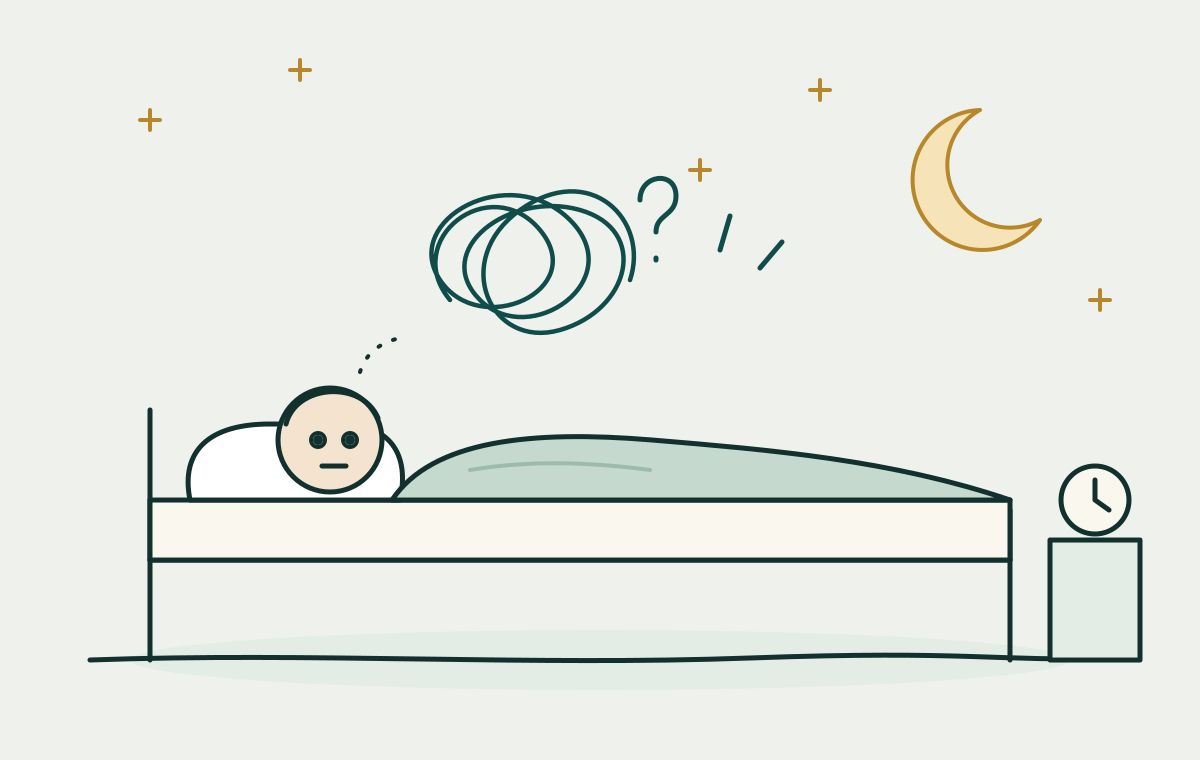
If this is you, nothing is wrong with you. A busy mind at bedtime is one of the most common reasons people lie awake. Here is why it happens and what you can do about it tonight.
Why thoughts get louder at night
Sleep specialists at the American Academy of Sleep Medicine point to a few simple reasons.
- The distractions are gone. All day, work, people and screens keep your attention. At night that noise drops away, and the thoughts you pushed aside come back.
- Bedtime may be your first quiet moment. If you have not stopped all day, your mind uses the first silence it gets.
- Stress keeps you in problem-solving mode. Unfinished tasks and “what if” thoughts tell your brain to stay alert, not to rest.
- Trying harder backfires. The more you force sleep, the more awake you feel. After a few bad nights, even your bed can start to feel like a place of frustration.
Five things that help
- Park your worries earlier. In the evening, well before bed, write down what is on your mind and a short list for tomorrow. Once a thought is on paper, your mind does not have to keep holding it. Our brain dump tool is made for this.
- Give yourself a wind-down. Spend the last 20 to 30 minutes on something quiet, like reading, gentle stretching or calm music. The NHS suggests relaxing for up to an hour before bed.
- Go to bed when you are sleepy, not just tired. And get up at the same time every day, even after a bad night. A steady wake-up time trains your body clock.
- Do not try to empty your mind. You cannot. Move your attention to something plain instead, like slow breathing or the feeling of the blanket. Try the breathing timer.
- Check what is keeping you alert. The NHS advises avoiding caffeine, alcohol and nicotine in the six hours before bed, skipping heavy late meals, and putting screens away before you sleep.
You do not fall asleep by trying. You fall asleep by giving your mind less to hold.
When to talk to a doctor
Self-help is a good first step, but it is not always enough. Talk to a doctor if you have trouble sleeping at least three nights a week, if it has gone on for months, or if tiredness is making your days hard to get through. A doctor can look for causes and offer treatments that an article cannot.
Keep going
- Lesson 4: A worry window, a way to give worry a set time that is not bedtime
- Books on sleep and rest
- Simple things for better sleep
Sources
- Why your mind won’t shut off at night, American Academy of Sleep Medicine, Sleep Education
- Insomnia, NHS
This article is general self-help information, not medical advice. If you are struggling, talk to a doctor or a mental health professional.