Stories · Story 4
The two woodcutters
Rest can be part of the work.
When you fall behind, the first idea is always the same: push harder. This story is about what that idea misses.
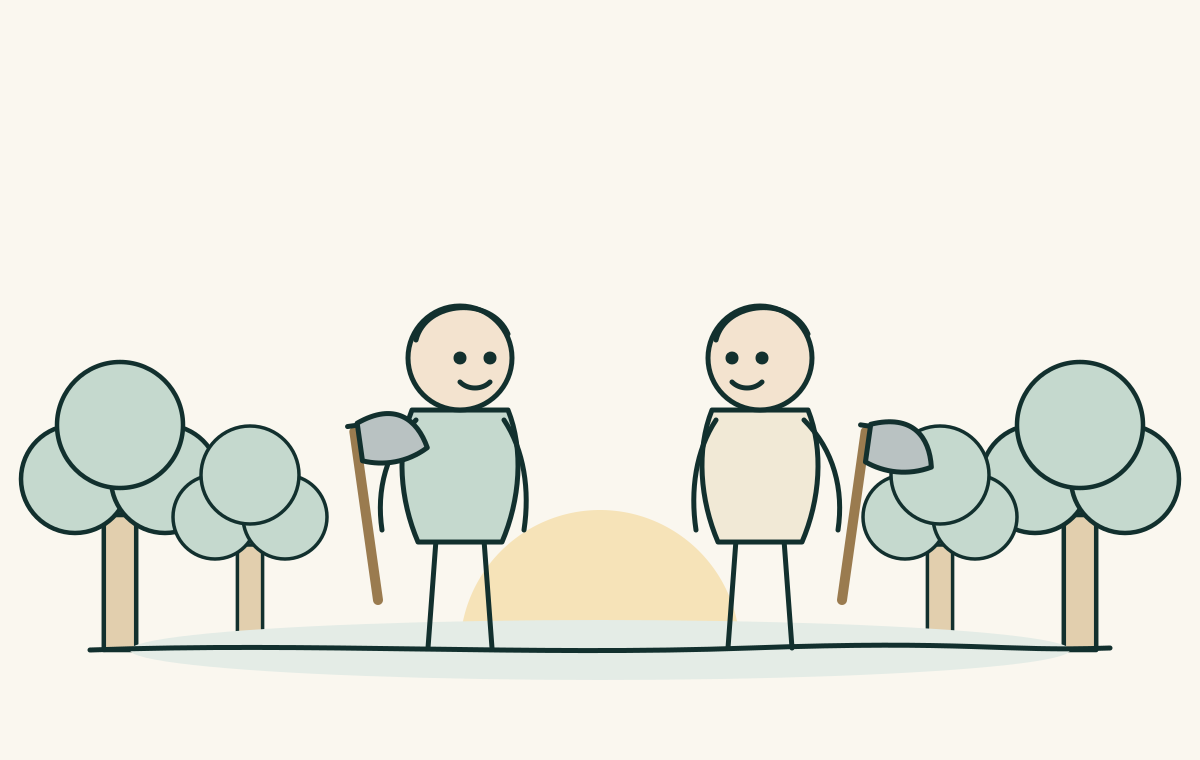
Same forest, same axes
Two woodcutters walked into the forest at sunrise. They carried similar axes, faced similar trees and agreed to stop at sunset. Both wanted to cut as much wood as they could.
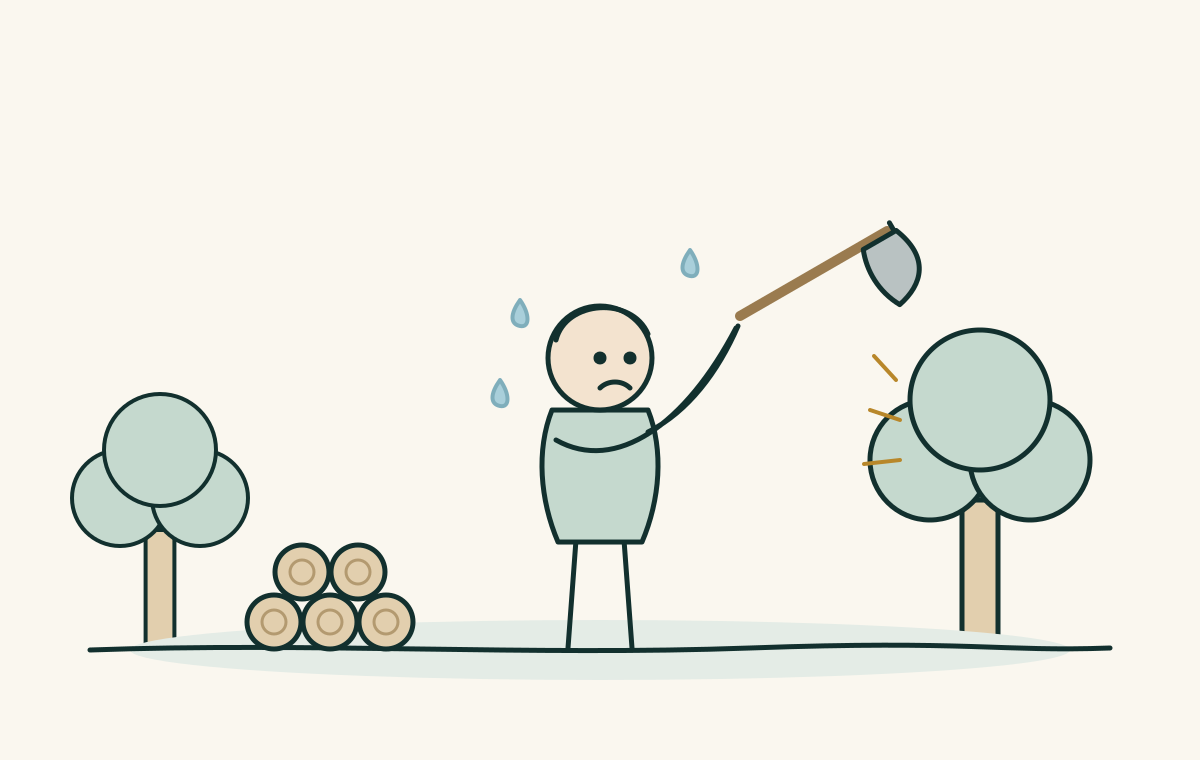
Swing harder
The first man started with great force. Apart from a short lunch, he never paused. When his arms got heavy, he swung harder. Every break looked like lost time.
He noticed the other man kept stepping away. He heard fewer strikes from that side of the forest. He felt sure that never stopping would win.
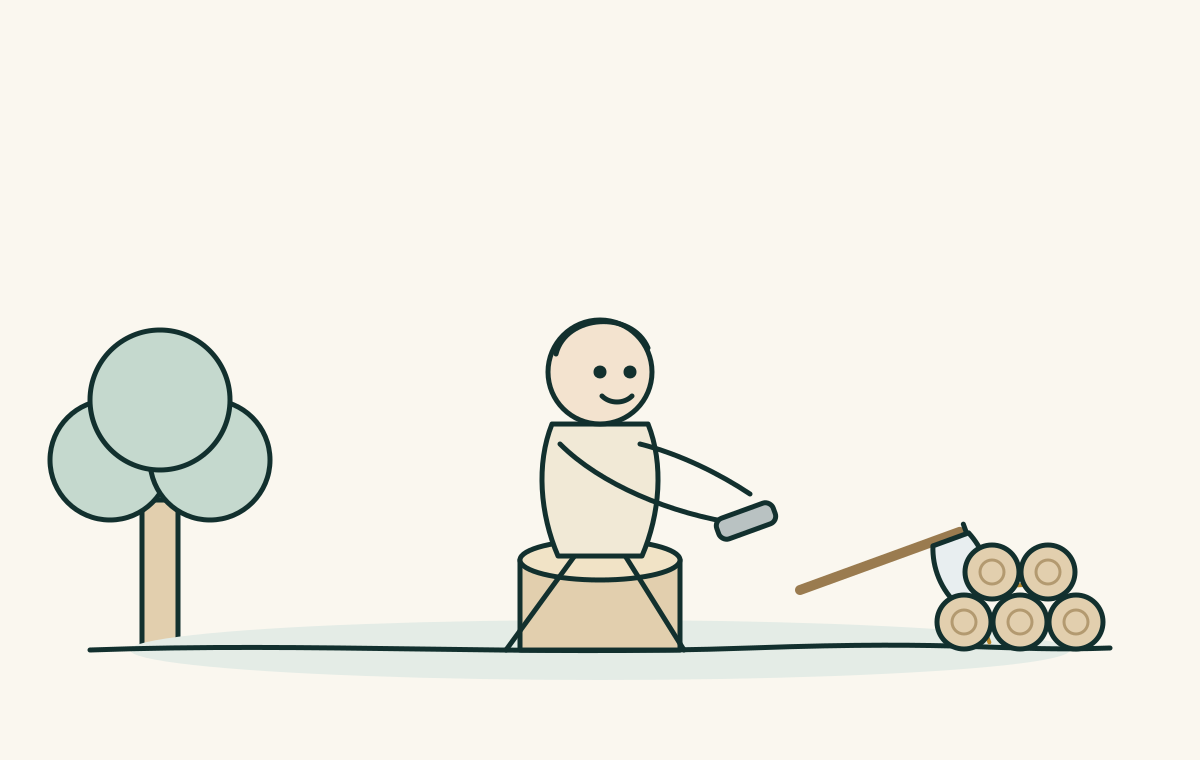
The pauses
The second man worked steadily too. But at regular times he stopped, sat down, and did something the first man never saw.
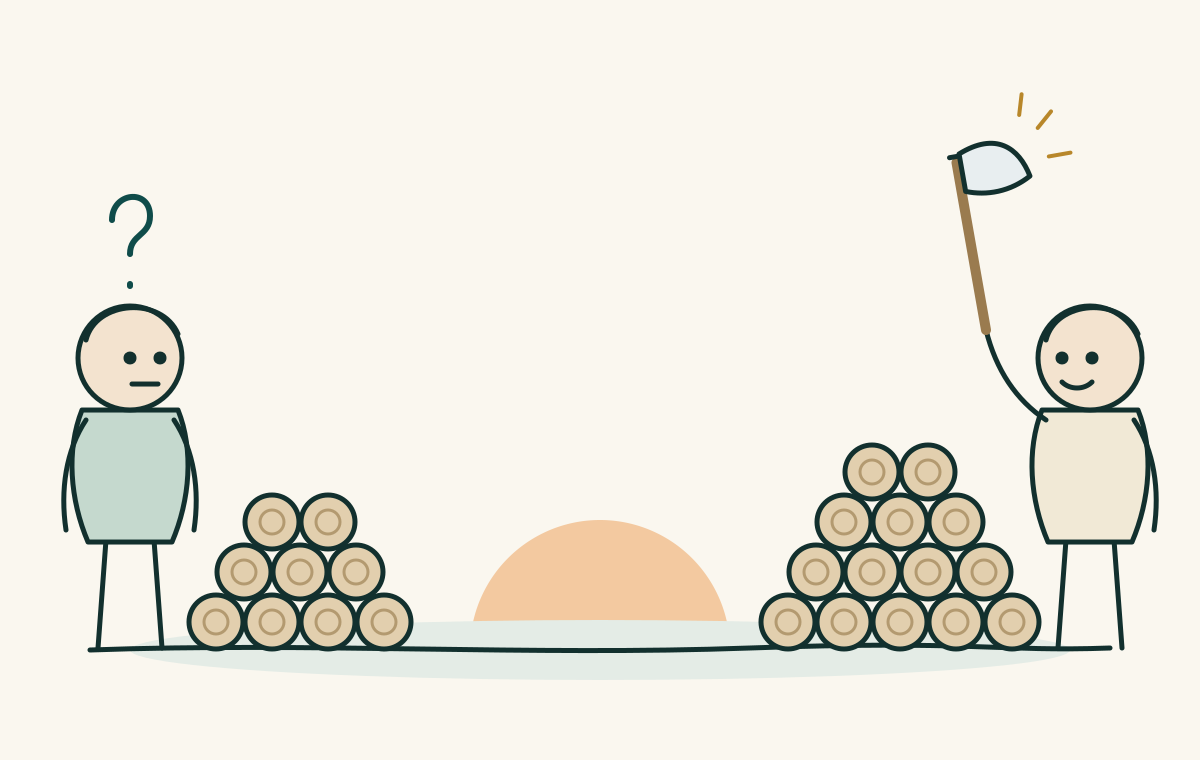
Sunset
At sunset they counted. The first man had cut an impressive pile. The second had cut more.
“You stopped again and again,” the first man said. “I kept working. How?”
The second man lifted his axe. Its edge caught the last light of the day.
“Every time I stopped, I sharpened the blade.”
What the story shows
Results are not just hours times effort. The quality of your attention, the state of your tools, a clear method and what your body can take all shape what your effort produces.
Under pressure, we protect what looks busy. One more message. One more late night. The same method, harder. That feels safer than stopping to ask whether the method still works.
- A useful pause
- It has a purpose and a time to come back. It restores energy, sharpens a skill, clears up priorities or removes something that slows you down.
- Avoidance
- It looks the same from outside. But it only puts the task off. Nothing is better when you return.
A fair note: this does not mean more breaks always mean better work. The right rhythm depends on the task and the person. The point is that recovery and learning belong inside your work, not after it.
Where it shows up
- Desk work. Ten focused minutes spent defining the real problem can save hours of producing the wrong answer.
- Creative work. Stepping away lets your attention reset. Planning when you will return makes the pause part of the work.
- Leading a team. Training and fixing a process can lower output for a week and raise it for a year.
- Your own life. Sleep, movement, reflection and learning are not prizes for after you succeed. They are the tools you succeed with.
Five questions worth asking
- Where am I swinging harder with a dull tool?
- Which skill, system or resource would make my effort count for more?
- What does a pause with a purpose look like for this task?
- How will I know when a break is helping, and when it has become avoiding?
- What upkeep have I put off because it did not look productive?
Write your answers in the brain dump
Sharpen before you swing
- Pick one task you repeat that takes more time than it should.
- Find the dull edge: unclear instructions, a missing skill, a poor tool, distraction or tiredness.
- Spend twenty minutes improving that one edge.
- Go back to the task for one focused stretch.
- Note what changed in speed, quality, stress or clarity.
Need a real pause first? Try the breathing timer
Hard work matters. Getting better at how you work is hard work too.